





The Gemologist’s Oracle — Birthstones by Month
Twelve months, twelve stones: symbolism, lore, anniversary meanings, hardness and care — from Cleopatra’s Barge in Naples, Florida.
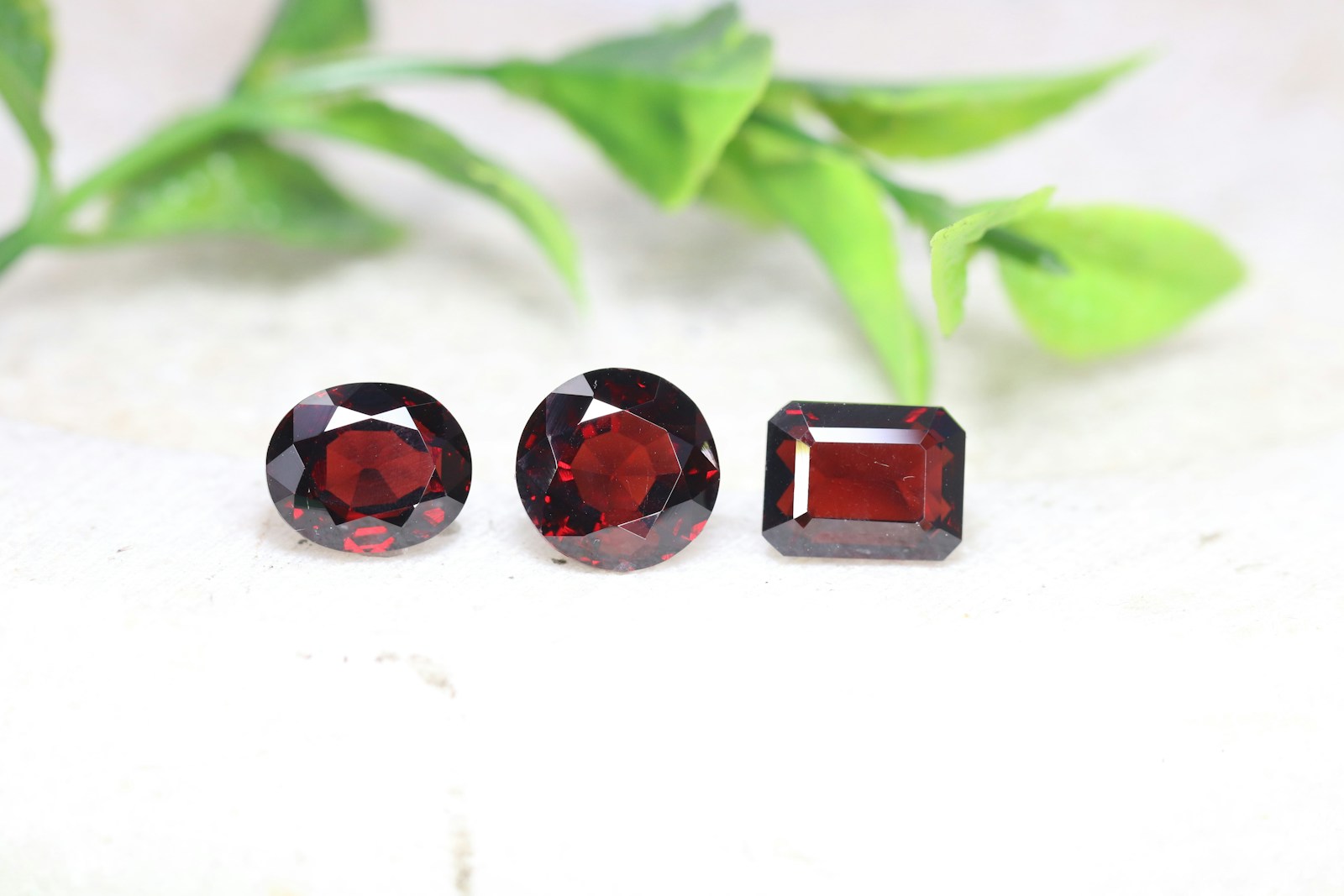
January — Garnet
Also: Almandine · Tsavorite · Spessartine · Malaya · Rhodolite · Anniversary: 2nd Anniversary · Mohs: 6.5–7.5 · Zodiac: Capricorn · Aquarius
Protection, safe travel, loyalty, friendship, and steady inner fire. The classic stone of trust and committed love — an ember that never asks to be noticed, only to endure.
Named from the Latin granatum — pomegranate — for its seed-like color and shape. Ancient Egyptians sealed garnets into tombs as lanterns for the next world; Roman signet rings pressed garnet into wax to seal letters of consequence. Medieval travelers carried it against poison, nightmares, and melancholy, and Bohemian garnets later paved the jewelry of an empire. It remains one of the oldest continuously treasured gemstones on Earth.
Durable for daily wear; warm soapy water and a soft brush. Avoid sharp thermal shock.
February — Amethyst
Also: Traditional companions: Hyacinth · Pearl · Anniversary: 6th Anniversary · Mohs: 7 · Zodiac: Aquarius · Pisces
Clarity, courage, calm, sobriety, and peaceful strength. The gem of clear-headed decision and serene royalty — violet light for a settled mind.
From the Greek amethystos — "not drunken." Greeks and Romans carved wine cups from the purple quartz believing it kept the head clear while the goblet emptied. Bishops wore it as the stone of spiritual sobriety, and for centuries it ranked beside ruby and sapphire until Brazil's great deposits shared the royal purple with the world. Leonardo da Vinci wrote that amethyst dissipates evil thoughts and quickens intelligence.
Sturdy quartz, but prolonged sunlight can soften its color. Keep it from long afternoons on a windowsill.
March — Aquamarine
Also: Traditional: Bloodstone (Heliotrope) · Anniversary: 19th Anniversary · Mohs: 7.5–8 · Zodiac: Pisces · Aries
Calm seas, safe travel, courage, serenity, and renewal. The modern stone of the ocean's steady heart — bravery that remains composed.
Latin for "sea water." Greek and Roman sailors slept with aquamarine beneath the pillow for calm passage, sometimes etching Neptune's likeness into the stone itself. Medieval seers polished it into scrying crystals, and legend claims it spilled from the treasure chests of sirens. Bloodstone — dark green jasper flecked with red — is March's older talisman of battlefield courage, carried by soldiers from Rome to the Crusades.
Hard and clear; ultrasonic-safe when untreated. Rinse away salt after a day at sea — it will understand.
April — Diamond
Also: Traditional companions: White Sapphire · Rock Crystal · Anniversary: 10th · 60th · 75th Anniversary · Mohs: 10 · Zodiac: Aries · Taurus
Eternal love, invincible strength, purity, and enduring courage. The unconquerable heart — light compressed until it refuses to break.
From the Greek adamas — "unconquerable." In Sanskrit it is vajra, the lightning-weapon of Indra. Ancient traditions called diamonds the tears of the gods or splinters of fallen stars; Roman soldiers wore them into battle as armor for the spirit. First gathered from India's river gravels over two thousand years ago, the hardest known natural substance became the modern emblem of everlasting commitment — the stone by which all other promises are measured.
Hardest of all gems, yet a sharp blow along the grain can cleave it. Even the invincible deserve gentleness.
May — Emerald
Also: Traditional: Agate · Linked to Cleopatra's own mines · Anniversary: 20th · 35th · 55th Anniversary · Mohs: 7.5–8 · Zodiac: Taurus · Gemini
Rebirth, fertility, wisdom, growth, and the living green of spring. The stone of Venus and of queens — power that grows rather than conquers.
Cleopatra's favorite gem, and the namesake spirit of this house. The ancient Egyptian mines of the Eastern Desert — later called Mons Smaragdus, the Emerald Mountain — supplied the Mediterranean world for centuries. Cleopatra claimed them as her own and gifted visiting dignitaries emeralds carved with her likeness, a diplomacy of green fire. Romans dedicated the stone to Venus; Spanish galleons later carried Colombian emeralds that redefined the color itself. Pliny wrote that nothing greens greener.
Most emeralds carry inner gardens (jardin) and an oil finish — no ultrasonics, no steam. Warm water, soft cloth, patience.
June — Pearl
Also: Moonstone · Alexandrite · Anniversary: 3rd · 30th Anniversary · Mohs: 2.5–4.5 · Zodiac: Gemini · Cancer
Purity, innocence, intuition, balance, and quiet wisdom grown layer by layer. Patience made luminous.
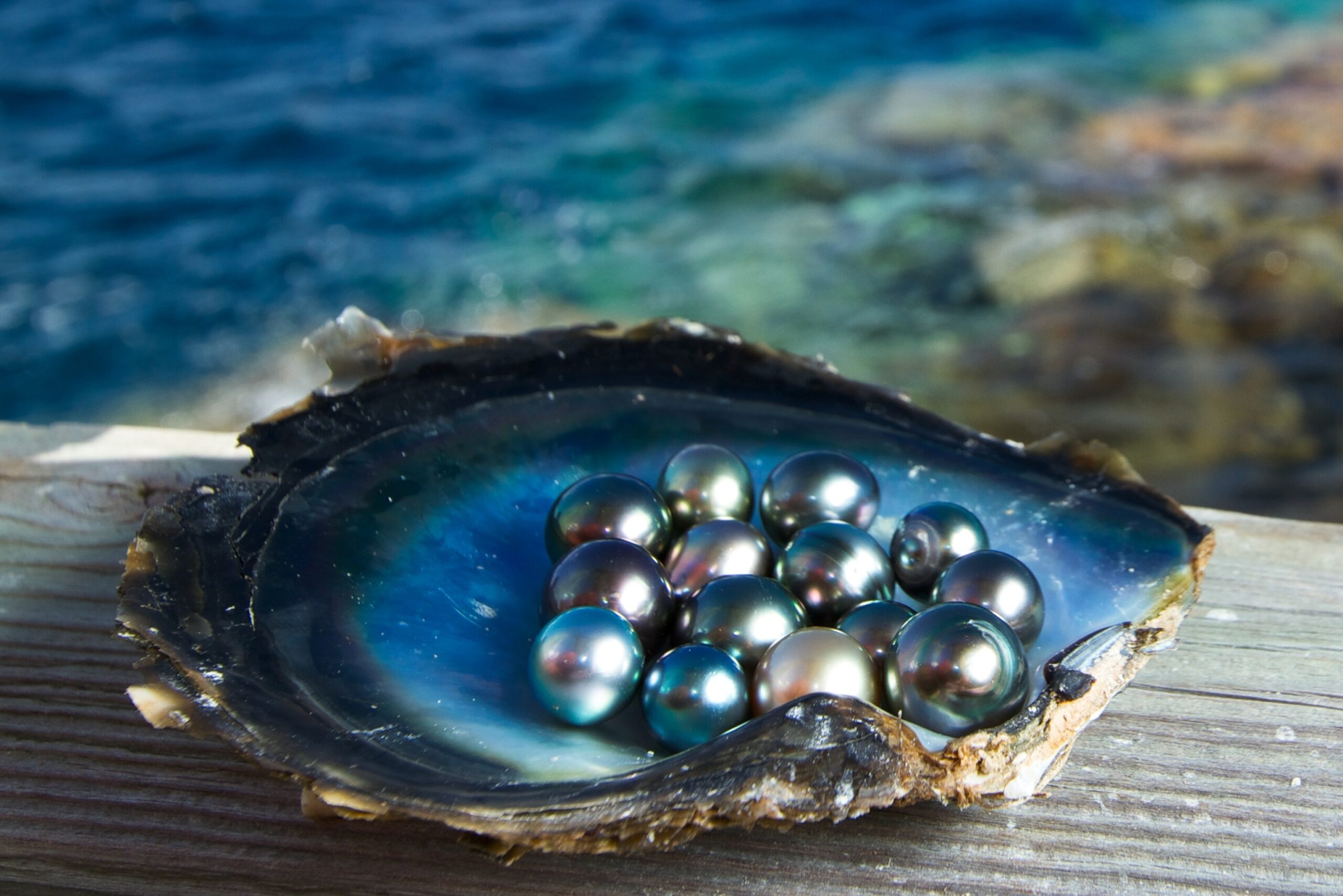
The only gem born of a living creature. Ancient Greeks called pearls the hardened tears of Aphrodite's joy; Cleopatra, at her most theatrical, is said to have dissolved one of history's great pearls in vinegar and drunk it to win a wager with Antony — the most expensive toast ever poured. Moonstone brings the soft inner glow of adularescence and the intuition of the lunar cycle. Alexandrite, the rare color-change chrysoberyl added in 1952, turns green by day and red by candlelight — transformation you can hold.
Softest of the birthstones. Last thing on, first thing off; no perfume, no ultrasonics. Wipe with silk and wear often — pearls love skin.
July — Ruby
Also: Traditional companions: Turquoise · Onyx · Anniversary: 15th · 40th Anniversary · Mohs: 9 · Zodiac: Cancer · Leo
Passion, vitality, courage, protection, and the fierce heart of summer. The color of life force itself.
Sanskrit ratnaraj — "king of gems." Burmese warriors were said to set rubies beneath the skin to become invincible in battle. Ancient Hindu texts promised that offering fine rubies to Krishna earned rebirth as an emperor, and European crowns hoarded "pigeon's-blood" reds above nearly all else — though several famous crown "rubies" later proved to be spinel in disguise. The same corundum family as sapphire, set ablaze by a whisper of chromium.
Second only to diamond in hardness — a confident daily companion. Untreated stones shrug off ultrasonic cleaning.
August — Peridot
Also: Spinel (added 2016) · Sardonyx (traditional) · Anniversary: 16th Anniversary (Peridot) · Mohs: 6.5–7 · Zodiac: Leo · Virgo
Strength, good fortune, light, happiness, and protection through the dark hours. The "evening emerald."
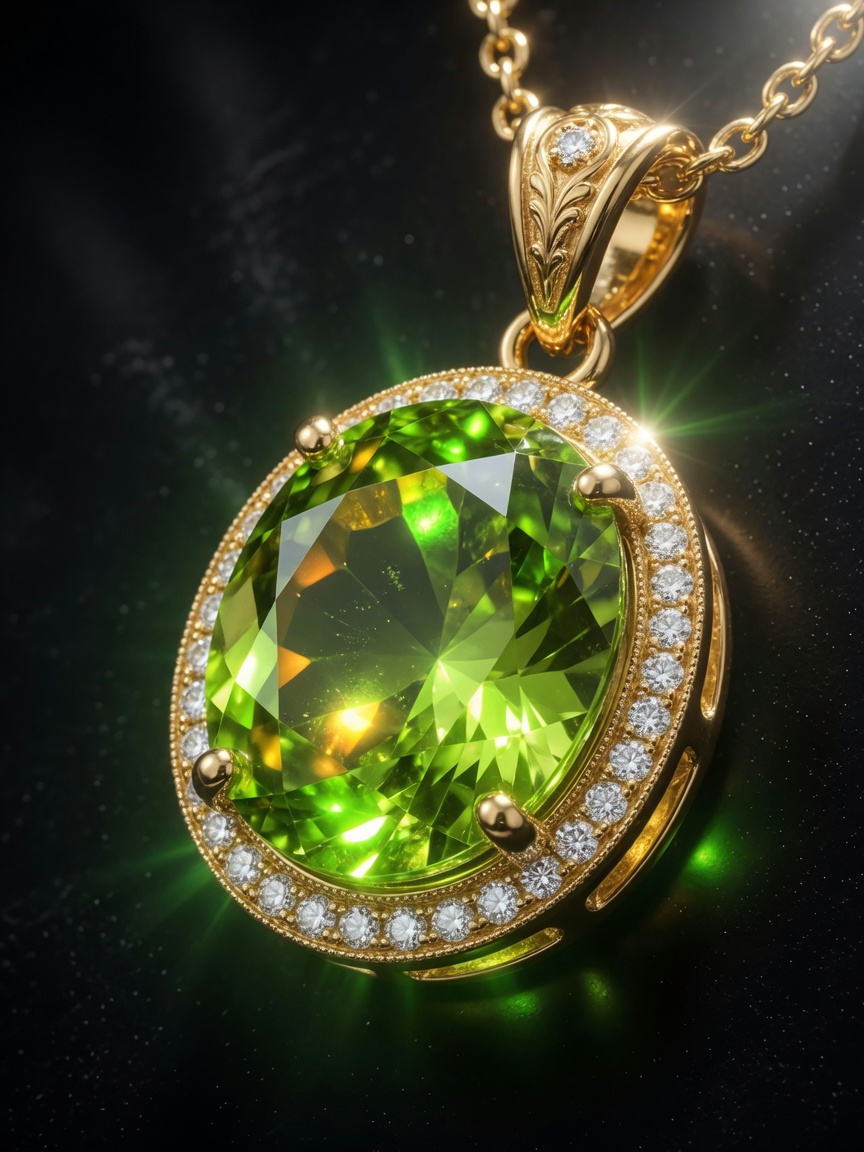
Born in the Earth's mantle and occasionally delivered by meteorite — a true space gem, found glittering in pallasites older than the planet's crust. Egyptians mined it by night on the serpent-guarded island of Zabargad, when the crystals were said to glow like green lanterns; Hawaiians know the beach-sand grains as the tears of the volcano goddess Pele. Set in gold it was worn against night terrors. Spinel, long mistaken for ruby in the crowns of Europe, joined August officially in 2016; sardonyx is the older Roman talisman of courage and clear speech.
Sensitive to acids and rapid heat; keep from ultrasonics. A gentle rinse keeps the volcano glow honest.
September — Sapphire
Also: Every corundum color except red — which is ruby · Anniversary: 5th · 45th Anniversary · Mohs: 9 · Zodiac: Virgo · Libra
Wisdom, loyalty, sincerity, divine favor, and the deep blue of truth. The color of a sky that keeps its word.
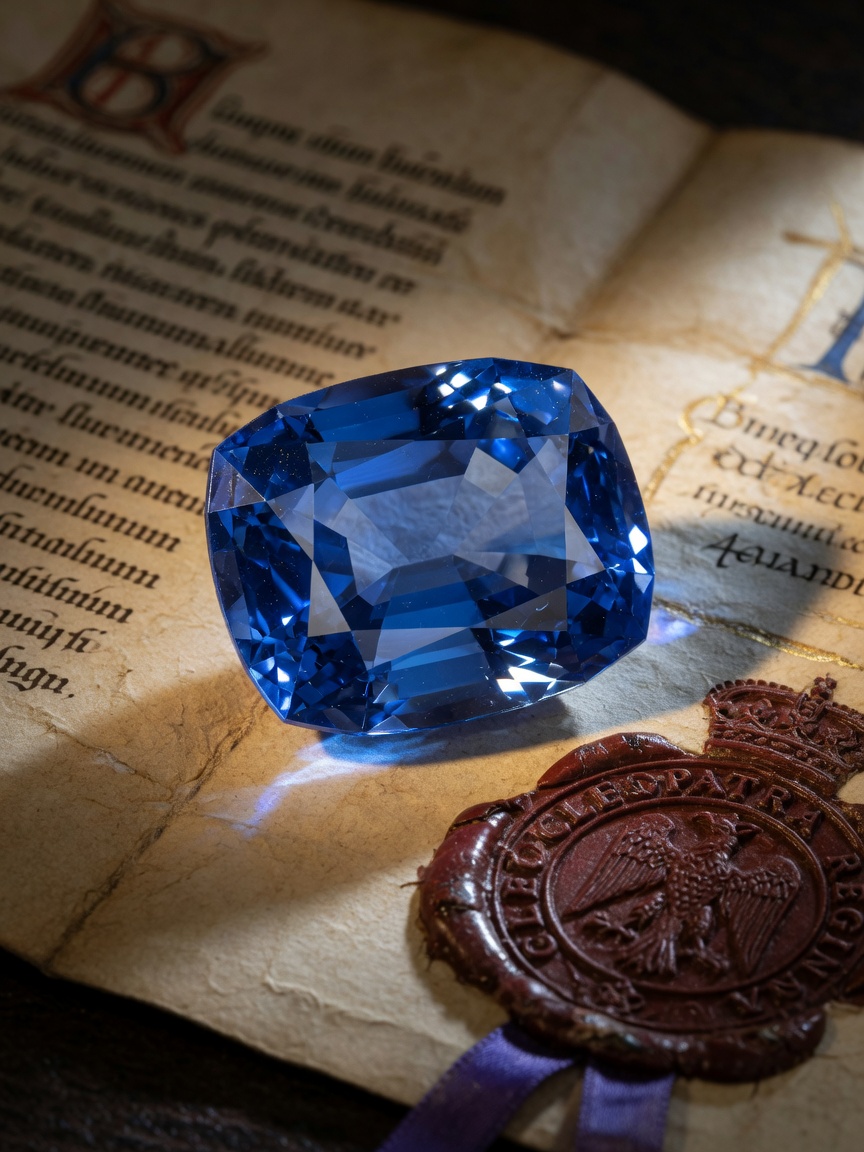
Medieval kings wore sapphire against envy and harm; lore claimed a venomous snake would die in a vessel of sapphire, and Persian cosmology set the entire world upon a giant one, its reflection painting the heavens blue. Long the stone of priests and sovereigns, it sealed treaties and consecrated cathedrals. Princess Diana's engagement ring — now Catherine's — made the blue sapphire the modern shorthand for romance with a spine of ancient wisdom. Padparadscha, star, and color-change varieties widen September's sky.
Corundum-tough and unbothered by daily life. Ultrasonic-safe when untreated; fracture-filled stones prefer warm water.
October — Opal & Tourmaline
Also: Both modern October stones · Opal the traditional favorite · Anniversary: Opal 14th · Tourmaline 8th · Mohs: Opal 5.5–6.5 · Tourmaline 7–7.5 · Zodiac: Libra · Scorpio
Opal: hope, creativity, confidence, and the play of every color at once. Tourmaline: compassion, protection, imagination, and the widest spectrum of any gem species. October refuses to choose a single story.
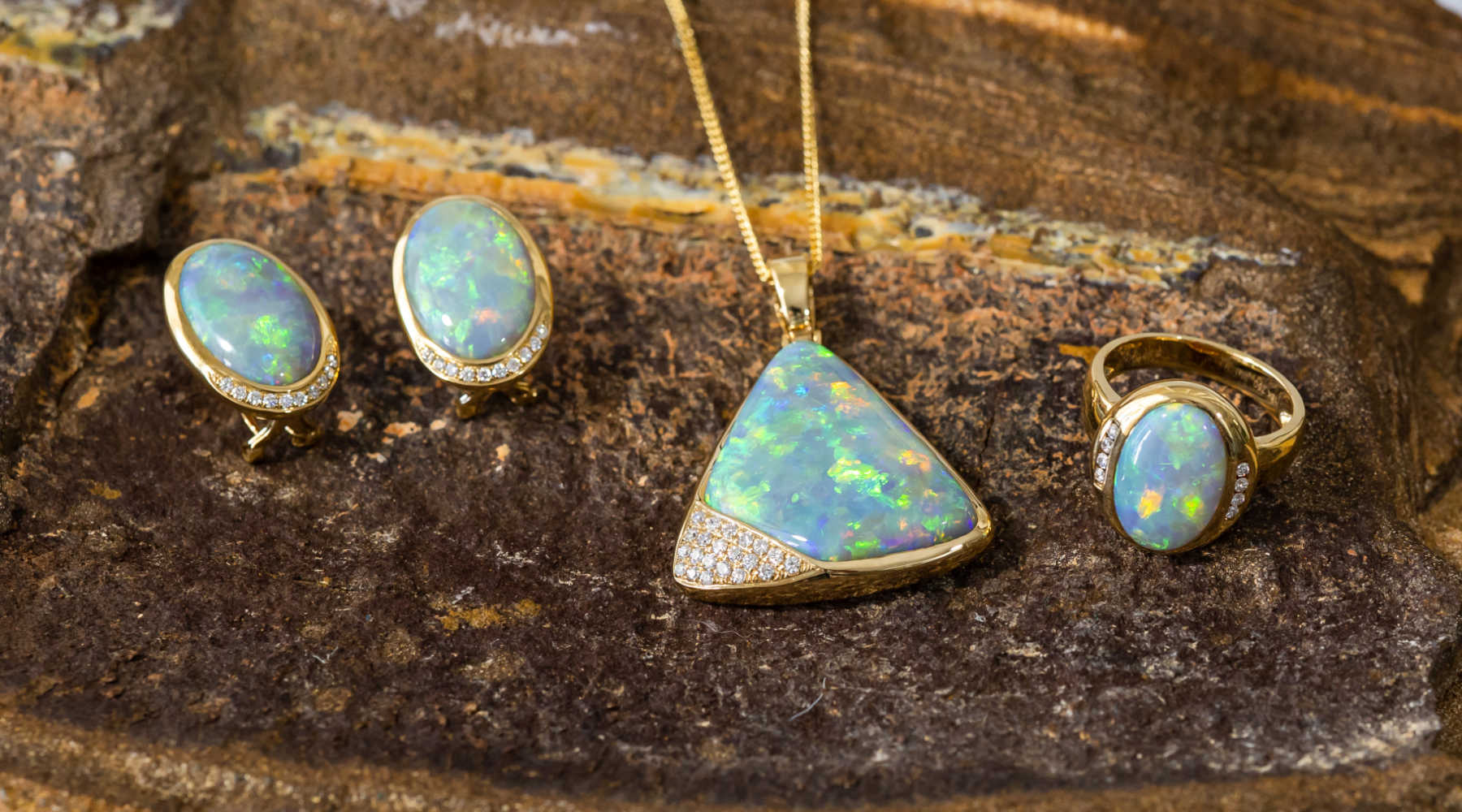
Romans called opal the most precious of stones, for it carried the virtues of all the others inside its shifting fire; Arabic lore said opals fell from the sky wrapped in lightning, and Greek myth named them the solidified tears of Zeus. Australia's opal fields — Lightning Ridge above all — later gave the world black opal's midnight fireworks. Tourmaline, once confused with ruby, sapphire, and emerald alike, was championed in America by Tiffany's George F. Kunz; Chinese Empress Dowager Tz'u Hsi so prized California pink tourmaline that she was laid to rest upon a carved tourmaline pillow.
Opal carries water within — no ultrasonics, no dry heat, no sudden cold. Tourmaline is sturdier but gathers dust electrically; wipe it and it thanks you.
November — Topaz & Citrine
Also: Imperial Topaz · Golden & London Blue varieties · Anniversary: Topaz 23rd · Citrine 13th · Blue Topaz 4th · Mohs: Topaz 8 · Citrine 7 · Zodiac: Scorpio · Sagittarius
Affection, strength, friendship, warmth, abundance, and the generous light of late autumn. Stored sunlight for the cooling year.
Medieval Europe bound topaz to friendship, intellect, and protection, believing it could cool boiling water and quiet anger alike; Imperial topaz took its name from the Russian tsars, who reserved the finest peach-gold crystals of the Urals for the crown. Citrine — sunny quartz named from the Latin for citrus — was formally added in 1952 and became the golden companion of merchants, tucked into cash boxes as the "success stone." Both carry the color of held light and the reputation of turning the wearer's face toward warmth and prosperity.
Topaz cleaves — guard it from knocks and ultrasonics. Citrine is easy company; keep it from long direct sun.
December — Turquoise · Tanzanite · Zircon
Also: Traditional: Turquoise & Lapis · Blue Topaz popular commercially · Anniversary: Turquoise 11th · Tanzanite 24th · Mohs: Turquoise 5–6 · Tanzanite 6–7 · Zircon 6–7.5 · Zodiac: Sagittarius · Capricorn
Protection, success, well-being, clarity, and the calm blue of winter sky and sacred water. Three blues for the darkest month.
Turquoise has been mined for at least five thousand years — sacred to Egyptian pharaohs, Persian courts, and the Native nations of the American Southwest alike; Shakespeare's Shylock treasured a turquoise ring as a love token above a wilderness of monkeys. Tanzanite, discovered in 1967 in the shadow of Kilimanjaro and added to the list in 2002, exists commercially in a single square-mile patch of Earth — a one-generation gem. Blue zircon, a natural mineral far older than the synthetic cubic zirconia it is unfairly confused with, contains some of the oldest matter ever dated on the planet: 4.4-billion-year-old crystals from Jack Hills, Australia.
Turquoise is porous — no oils, perfumes, or ultrasonics. Tanzanite dislikes sudden temperature swings. Zircon abrades at edges; store each blue alone.